
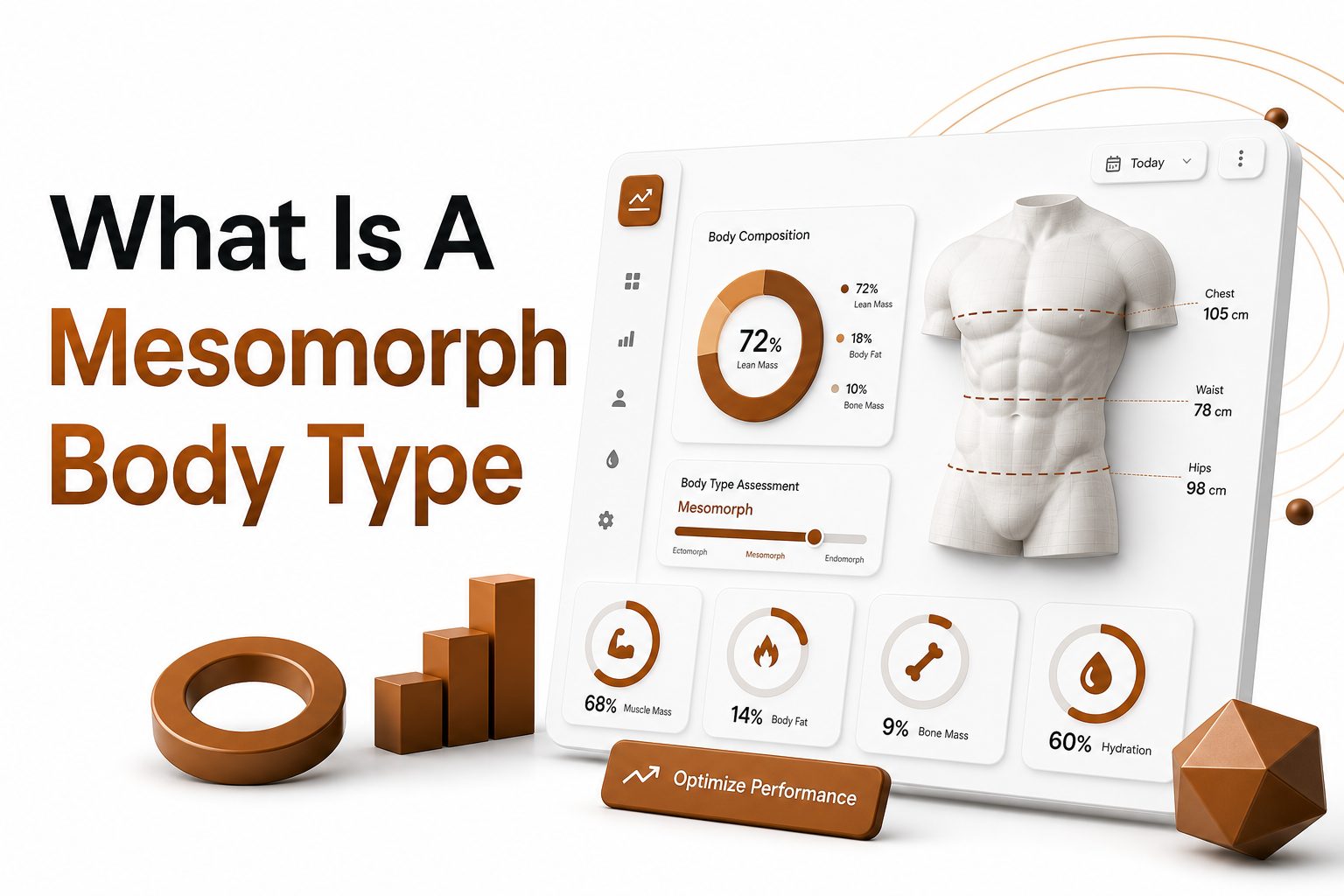
A mesomorph body type usually refers to a naturally athletic build with moderate body fat, visible muscle shape, and a frame that responds well to strength training. Many people with this body type gain muscle more easily than they lose overall shape.
The idea comes from somatotype theory, which groups bodies into ectomorph, mesomorph, and endomorph categories. Real bodies rarely fit one label perfectly, but the mesomorph category can still help explain common fitness patterns and body composition tendencies.
People often search for what is a mesomorph body type because they want practical guidance for training, eating, and maintaining results. The label can be useful when it supports better habits, not when it becomes a fixed identity.
Common Mesomorph Traits
Mesomorphs often have broader shoulders, a narrower waist, stronger limbs, and naturally defined muscle lines. Their bodies may look firm even without intense training, especially when daily movement, sleep, and food quality are reasonably consistent.
This body type may gain strength quickly during resistance training. A person may notice faster changes in arms, shoulders, chest, glutes, or legs compared with friends following similar routines, although genetics and training history still matter.
Mesomorphs can also gain fat when calorie intake stays high for too long. The athletic look is not automatic forever, so long-term results still depend on balanced nutrition, regular training, recovery, and realistic lifestyle choices.
Key traits at a glance
- Naturally athletic frame with visible muscle shape
- Moderate ability to gain muscle and strength
- Broader shoulders or stronger-looking limbs
- Responsive results from weight training
- Possible fat gain with long-term overeating
- Best progress from balanced training and nutrition
Mesomorph Body Type and Genetics
Genetics influence bone structure, muscle fiber distribution, hormone levels, appetite signals, and how the body stores fat. These factors shape why some people appear more mesomorphic, even before they begin a structured fitness routine.
A mesomorph body type does not mean someone has perfect genetics. It only means certain traits may support muscle gain or athletic performance. Consistency still separates short-term progress from a strong, healthy body that lasts.
Family history can offer useful clues. If relatives tend to build muscle easily, carry fat evenly, or maintain a sturdy frame, those patterns may reflect inherited traits that affect body composition and training response.
Mesomorph Versus Other Body Types
Ectomorphs are often described as naturally lean, with smaller frames and a harder time gaining weight. Endomorphs are often described as softer or rounder, with easier fat gain and a slower visible response to calorie surplus.
Mesomorphs sit between these two descriptions, with more natural muscle and a balanced frame. In real life, many people are mixed types, such as ecto-mesomorph or endo-mesomorph, rather than fitting one category cleanly.
The goal is not to compare bodies or rank them. Each body type has strengths and challenges. The best approach is to use the label as a guide for better exercise selection, nutrition planning, and recovery habits.
Training Strengths of Mesomorphs
Mesomorphs usually respond well to progressive strength training because their bodies can add muscle with consistent overload. Compound lifts such as squats, presses, rows, lunges, deadlifts, and pull movements often produce noticeable changes.
A balanced routine works better than chasing only heavy weights. Mesomorphs often benefit from mixing strength sets, moderate-rep hypertrophy work, mobility drills, and conditioning sessions that support heart health without limiting muscle recovery.
Because visible changes may happen quickly, it can be tempting to train too hard too often. Progress improves when workouts include planned rest, controlled volume, and enough attention to technique, joints, and connective tissue.
Best Workout Style for Mesomorphs
A strong mesomorph routine usually includes three to five training days per week. This gives enough stimulus for muscle growth while leaving room for recovery, daily movement, and flexibility around work, family, and stress.
Strength sessions can focus on major movement patterns instead of isolated body parts alone. Push, pull, squat, hinge, carry, and core movements create a practical structure that builds muscle, coordination, posture, and athletic ability.
For training structure, see our body recomposition workout plan. A mesomorph may use that style effectively because it combines resistance training, calorie control, and conditioning without relying on extreme dieting or excessive cardio.
Weekly training mix
Day 1: Lower-body strength with squats, hinges, lunges, and core work.
Day 2: Upper-body strength with presses, rows, pulldowns, and arm accessories.
Day 3: Low-impact cardio, mobility, or active recovery.
Day 4: Full-body hypertrophy with moderate reps and controlled tempo.
Day 5: Conditioning intervals, carries, sled work, or sport-based movement.
Day 6: Optional light activity such as walking, cycling, or yoga.
Day 7: Rest or gentle recovery based on fatigue and schedule.
Cardio for Mesomorphs
Cardio helps mesomorphs manage body fat, improve endurance, support heart health, and recover better between strength sessions. It does not need to dominate the routine unless the person has a sport-specific endurance goal.
Two to four cardio sessions per week is often enough for general fitness. Brisk walking, cycling, rowing, swimming, incline treadmill work, and short intervals can all fit well, depending on joints, preferences, and recovery needs.
High-intensity cardio can be useful, but too much may affect strength progress. A practical plan combines low-intensity movement for health with occasional intervals for conditioning, speed, and calorie output.
Nutrition for Mesomorphs
Mesomorphs often do well with balanced meals built around protein, quality carbohydrates, healthy fats, and fiber-rich produce. Their bodies may handle carbohydrates well, especially when carbs support training performance and recovery.
Protein is central because it supports muscle repair, fullness, and body composition. Lean meats, eggs, fish, Greek yogurt, tofu, tempeh, legumes, and protein-rich grains can all help meet daily needs without making meals restrictive.
For meal ideas, read our mesomorph diet plan guide. A good nutrition plan does not remove entire food groups without reason; it adjusts portions, timing, and food quality around the person’s goals and training load.
Macronutrient Balance for Mesomorphs
A practical starting point is moderate protein, moderate carbohydrates, and moderate fats. Many active mesomorphs feel best when carbohydrates are placed around workouts, while protein stays steady across the day.
For muscle gain, a small calorie surplus works better than aggressive overeating. This supports strength progress while limiting unnecessary fat gain. For fat loss, a moderate calorie deficit keeps training performance higher than crash dieting.
Meal quality matters more than perfect macro math for most people. Whole foods, consistent protein, enough fluids, and regular meal timing can create strong results before advanced tracking becomes necessary.
Common food priorities
Protein: chicken, turkey, eggs, fish, lean beef, tofu, tempeh, lentils, Greek yogurt.
Carbohydrates: oats, rice, potatoes, fruit, whole grains, beans, vegetables.
Fats: olive oil, avocado, nuts, seeds, fatty fish, whole eggs.
Fiber: leafy greens, berries, beans, vegetables, chia seeds, whole grains.
Hydration: water, mineral-rich foods, and fluids matched to sweat levels.
Fat Gain and Mesomorphs
Mesomorphs may gain muscle easily, but they can also gain fat when food intake exceeds energy needs for long periods. A strong frame can sometimes hide gradual fat gain until clothes, photos, or performance reveal changes.
This is why regular check-ins help. Waist measurements, progress photos, strength logs, energy levels, and sleep quality give better feedback than scale weight alone, especially when muscle gain and fat loss happen together.
Fat loss for mesomorphs usually works well with steady habits. Strength training, daily steps, adequate protein, controlled portions, and enough sleep can reduce fat while preserving the muscle that gives the body its athletic shape.
Muscle Building for Mesomorphs
Mesomorphs often have a strong advantage in muscle-building phases because they respond well to progressive overload. Training close to failure, increasing loads gradually, and repeating core movements can create visible changes over time.
Volume needs to be high enough to challenge muscles but not so high that recovery suffers. Most lifters grow well with several hard sets per muscle group each week, spread across two or more sessions.
Good form remains essential. Fast progress can create confidence, but poor technique increases injury risk. Controlled reps, stable joints, full ranges of motion, and patient load increases support better long-term development.
Recovery and Lifestyle Habits
Recovery affects how well a mesomorph turns training into results. Sleep, protein intake, stress management, hydration, and rest days all influence strength, mood, appetite, hormones, and the body’s ability to repair tissue.
Seven to nine hours of sleep is a helpful target for most adults. Poor sleep can raise cravings, reduce training performance, slow recovery, and make body composition goals harder even when workouts are consistent.
Lifestyle stress also matters. Work pressure, travel, alcohol, low movement, and irregular meals can affect results. A plan that fits normal life usually works better than an intense plan that collapses after two weeks.
Signs You May Be a Mesomorph
You may lean mesomorphic if you build muscle with moderate effort, keep a naturally firm shape, and notice quick strength changes when training consistently. Your shoulders, chest, arms, legs, or glutes may develop visibly.
Another sign is balanced weight change. You may gain or lose weight without extreme difficulty, especially when food intake and exercise habits shift. This flexibility can be useful when goals change across seasons.
Still, body type is not a medical diagnosis. If your body does not match every trait, that is normal. Hormones, age, training history, medications, health conditions, and life stage can all affect appearance and performance.
Mesomorph Body Type for Women
Women with mesomorphic traits may have strong legs, defined shoulders, visible glutes, and a naturally athletic shape. They may respond well to strength training without needing very high workout volume or restrictive eating patterns.
Some women worry that lifting weights will make them look too muscular. In reality, resistance training usually improves shape, posture, bone health, confidence, and metabolic health while supporting a leaner, more balanced physique.
Hormonal changes across the menstrual cycle, pregnancy, postpartum recovery, and menopause can affect training and nutrition needs. Flexible programming is more useful than rigid body type rules during these life stages.
Mesomorph Body Type for Men
Men with mesomorphic traits often build noticeable muscle in the chest, shoulders, back, arms, and legs. They may progress quickly with compound lifts, especially when they eat enough protein and follow a structured routine.
The main challenge for men is often overtraining or overeating during bulking phases. Since muscle gain may come easily, extra calories can seem harmless, but long surpluses may add more fat than expected.
A lean, strong physique usually comes from patient strength work, controlled nutrition, consistent cardio, and recovery. Athletic genetics can help, but they do not replace disciplined habits across months and years.
Mistakes Mesomorphs Often Make
One common mistake is relying on natural shape instead of building consistent habits. A person may stay fit-looking for years, then notice unwanted changes when activity drops, stress rises, or eating becomes less structured.
Another mistake is training with too much intensity every session. Mesomorphs may enjoy hard workouts, but the body still needs lighter days, deloads, mobility work, and enough rest to keep joints healthy.
Diet extremes can also slow progress. Very low calories may reduce performance, while constant surplus can increase fat gain. A measured approach gives mesomorphs the best chance to build muscle while staying healthy.
Simple daily habits
Eat protein at most meals.
Lift weights three to five times weekly.
Walk daily or keep step count consistent.
Use cardio for health and conditioning.
Sleep enough to support recovery.
Track progress with more than the scale.
Adjust food portions before changing everything.
Health Beyond Body Type
A mesomorph body type may describe appearance, but health includes more than shape. Blood pressure, cholesterol, blood sugar, mobility, mental health, digestion, sleep, and fitness capacity all matter.
Someone can look athletic while still needing better habits. Regular health screenings, balanced meals, strength training, cardiovascular exercise, and stress management create a stronger foundation than appearance-based goals alone.
The most useful body type plan supports health first. When energy, movement, mood, and recovery improve, physical results usually become easier to maintain without constant restriction or pressure.
Conclusion
A mesomorph body type is commonly linked with an athletic frame, easier muscle gain, moderate fat storage, and strong training response. These traits can be helpful, but they still require consistent workouts, balanced meals, recovery, and realistic habits.
The best plan combines resistance training, smart cardio, enough protein, controlled portions, and steady lifestyle routines. Body type can guide decisions, yet progress depends on repeated actions that fit real life.
If you have wondered what is a mesomorph body type, the simple answer is a naturally muscular and athletic-leaning build that often responds well to training. Use the label as guidance, then shape your routine around your goals.
Frequently Asked Questions
What does a mesomorph body look like?
A mesomorph body often looks athletic, firm, and naturally muscular. Common features include broader shoulders, stronger limbs, a narrower waist, and moderate body fat. The exact look varies based on genetics, training, nutrition, age, and lifestyle.
Can a mesomorph gain fat easily?
Yes, a mesomorph can gain fat when calorie intake stays above energy needs for too long. Muscle may come easily, but fat gain still happens with overeating, low activity, poor sleep, high stress, or inconsistent training habits.
What workout is best for mesomorphs?
A balanced plan with strength training, moderate cardio, mobility, and recovery works well. Mesomorphs often respond to compound lifts, progressive overload, and full-body or upper-lower routines performed three to five days per week.
How should a mesomorph eat?
A mesomorph usually does well with protein-rich meals, quality carbohydrates, healthy fats, vegetables, and steady hydration. Portions can change based on goals, with a small surplus for muscle gain or a moderate deficit for fat loss.
Is mesomorph the best body type?
No body type is best. Mesomorphs may have advantages for muscle gain and athletic appearance, but every body type has strengths. Health, performance, confidence, and consistency matter more than fitting one physical category.
0 Comments