
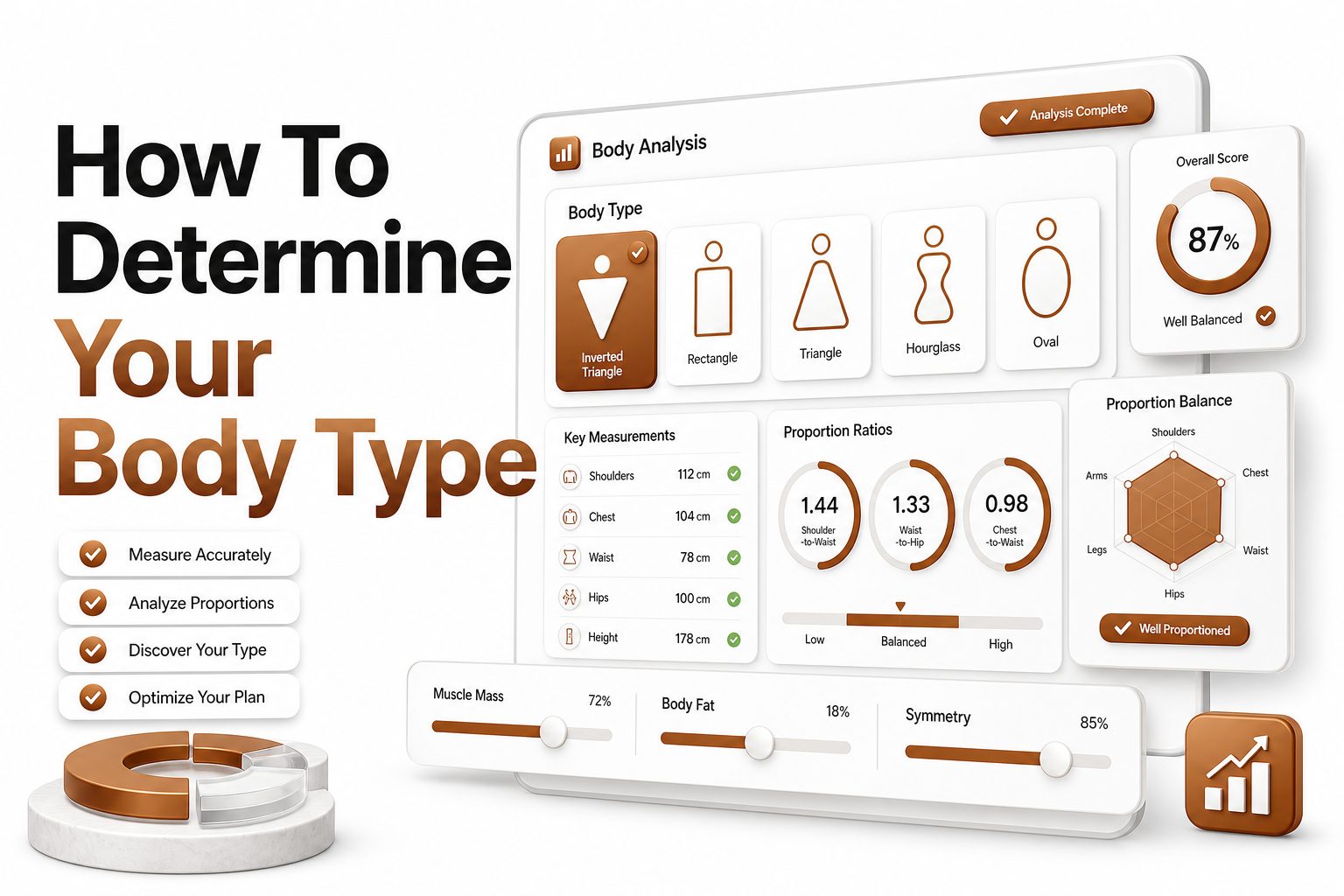
Knowing how to determine your body type can make clothing choices, fitness planning, and personal styling feel more practical. It gives you a clearer view of your natural proportions without turning your body into a strict category.
Body type is not about judging size, weight, or beauty. It is about looking at bone structure, fat distribution, muscle pattern, and overall proportions so you can make choices that suit your frame.
Your body may also shift over time because of age, training, hormones, pregnancy, stress, or lifestyle changes. That is why body type works best as a guide, not a permanent label.
Why Body Type Matters
Your body type can influence how clothes sit, where fabric pulls, and which silhouettes feel balanced. Once you know your proportions, shopping becomes easier because you can focus on fit instead of trends alone.
It can also help with fitness goals. Some people gain muscle quickly in certain areas, while others store fat around the hips, waist, or upper body. These patterns can guide training choices.
Most importantly, body type knowledge can reduce guesswork. Instead of copying someone else’s style or workout plan, you can choose options that match your natural shape and daily routine.
Quick Measurement Checklist
Shoulders: Measure around the widest part of your shoulders.
Bust or chest: Measure around the fullest part of your upper body.
Waist: Measure around the narrowest part of your torso.
Hips: Measure around the widest part of your hips and seat.
Frame: Look at wrist size, shoulder width, and bone structure.
How to Take Accurate Measurements
Use a soft measuring tape and stand in front of a mirror. Keep the tape level, close to the skin, and comfortable without pulling it tight. Wear fitted clothing or measure over undergarments.
Take each measurement twice to avoid small mistakes. If the numbers differ, measure once more and use the average. Good lighting and relaxed posture will help you get more reliable results.
Write your numbers down in the same order every time. Shoulders, bust or chest, waist, and hips are the main points for shape analysis, while height and weight give added context.
The Main Female Body Shapes
Common female body shapes include rectangle, pear, hourglass, inverted triangle, and apple. These names describe proportions, not value. Two people can share a shape and still look very different.
A rectangle shape usually has similar shoulder, waist, and hip measurements. A pear shape often has hips wider than the shoulders. An hourglass shape has balanced shoulders and hips with a smaller waist.
An inverted triangle has broader shoulders than hips, while an apple shape often carries more fullness around the midsection. These categories are useful when planning outfits and choosing cuts that feel balanced.
The Main Male Body Types
Male body types are often described through ectomorph, mesomorph, and endomorph patterns, along with frame and proportion. These terms relate to build, muscle tendency, and fat distribution rather than clothing shape alone.
An ectomorph build is usually leaner with narrower shoulders and longer limbs. A mesomorph build tends to show muscle more easily. An endomorph build may carry more softness and gain weight more readily.
Many men are a blend of these types. For style, shoulder width, waist size, chest shape, and leg proportion often matter more than fitting perfectly into one label.
Proportion Clues You Can Notice
Look at where your body naturally appears widest. For some people, the shoulders create the strongest line. For others, the hips, waist, or chest are the most noticeable areas.
Pay attention to how clothing behaves. Pants that fit the waist but pull at the hips, jackets that feel tight across the shoulders, or dresses that gap at the waist all reveal useful proportion clues.
Photos can help when used kindly. Take a straight, relaxed photo in fitted clothing and compare shoulder, waist, and hip width. Avoid posing, twisting, or using angles that change your natural outline.
Simple Body Shape Comparison
Rectangle: Shoulders, waist, and hips appear fairly even.
Pear: Hips are wider than shoulders and bust or chest.
Hourglass: Shoulders and hips are balanced with a defined waist.
Inverted triangle: Shoulders or chest are wider than hips.
Apple: Midsection carries more fullness than hips or shoulders.
Frame Size and Bone Structure
Frame size affects how your body type appears. A person with a small frame may look delicate even with muscle, while someone with a larger frame may appear broader at the same height and weight.
Wrist size can give a rough clue. If your fingers overlap around your wrist, you may have a smaller frame. If they touch, you may have a medium frame. If they do not meet, your frame may be larger.
Bone structure does not change much, even when weight changes. That is why frame size is useful when choosing realistic fitness goals, clothing proportions, and personal style references.
Body Fat Distribution
Fat distribution plays a major role in body type. Some people store fat mostly around the hips and thighs, while others carry it around the waist, chest, back, arms, or lower abdomen.
This pattern is influenced by genetics, hormones, age, sleep, stress, and activity level. It is not fully controlled by diet or exercise, although lifestyle can affect overall body composition.
Knowing your fat distribution can help you dress comfortably and train wisely. It can also keep expectations grounded, especially when comparing your body to people with different natural patterns.
Muscle Pattern and Training Response
Muscle pattern affects body type because some areas respond faster to training. One person may build strong legs quickly, while another may see faster changes in shoulders, arms, or back.
Training can change your shape, but it usually works with your natural structure. A narrow frame can become stronger and more defined, yet it may not look like a naturally broad frame.
This is why body type and fitness should work together. Choose workouts that support strength, posture, energy, and health while respecting the way your body naturally develops.
Clothing Fit and Body Type
Clothing fit gives practical feedback about your proportions. If tops often feel tight at the shoulders, your upper body may be broader. If jeans fit your hips but gap at the waist, your waist-to-hip difference is larger.
For rectangle shapes, structured pieces and waist definition can add shape. For pear shapes, balanced shoulders and clean lower-body lines often work well. For hourglass shapes, clothing that follows the waist can feel natural.
Apple shapes may prefer soft structure and vertical lines, while inverted triangle shapes often benefit from lower-body balance. For more styling detail, read our body shape styling guide when planning outfits.
Body Type and Personal Style
Your body type should support your personal style, not limit it. A shape guide can point you toward flattering cuts, but your taste, comfort, culture, and lifestyle still matter most.
If you like oversized clothing, tailoring, fitted looks, or layered outfits, body type knowledge can help you adjust proportions. The goal is not to hide your body but to create the visual balance you prefer.
Try clothes in real life whenever possible. Fabric weight, stretch, seam placement, and length can change everything, even when a garment appears right for your body type on paper.
Common Measurement Mistakes
One common mistake is measuring over bulky clothing. Thick fabric can add extra inches and make your proportions look different. Fitted clothing or undergarments will give a clearer result.
Another mistake is pulling the tape too tight around the waist or hips. Measurements should reflect your body at rest. Holding your breath or tightening your posture can distort the numbers.
People also confuse weight with body type. Weight can change quickly, while proportions and frame often remain more consistent. Use measurements and visual balance together for a clearer reading.
Body Type Changes Over Time
Your body type can shift gradually. Pregnancy, menopause, muscle gain, weight changes, illness, medication, and aging can all affect where your body stores fat and how your proportions appear.
This does not mean your earlier body type was wrong. It simply means your current body deserves current information. Taking fresh measurements every few months can help you stay aligned with your real shape.
A flexible view is healthier than a fixed label. Your body type should help you make better choices today, not hold you to an old version of yourself.
Using Body Type for Fitness
Body type can guide your fitness plan, especially when paired with your goals. A leaner build may focus on progressive strength training and nutrition support, while a softer build may combine strength, mobility, and cardio.
If your hips and thighs gain muscle easily, lower-body training may show results quickly. If your upper body responds faster, back, chest, and shoulder work may change your outline more noticeably.
The best plan is still the one you can repeat. Body type gives direction, but consistency, recovery, food quality, and stress management shape long-term progress.
Using Body Type for Wardrobe Planning
A useful wardrobe starts with fit. Once you know your body type, you can choose pieces that support your proportions, reduce alterations, and work across different outfits.
For example, people with defined waists may prefer wrap tops, high-rise bottoms, or tailored jackets. People with straighter shapes may enjoy structured layers, cropped jackets, or belts placed with intention.
You can also review our wardrobe basics checklist to build a closet around your real lifestyle, body shape, and preferred silhouettes instead of buying separate pieces that never work together.
Body Confidence and Realistic Labels
Body type labels can be helpful, but they are not perfect. Real bodies are more detailed than five or six categories. Many people sit between types or change depending on clothing, posture, and weight.
Avoid using labels as criticism. If a category makes you feel boxed in, use the measurements instead. Numbers can guide fit without creating emotional pressure around appearance.
Confidence grows when your choices fit your real body. A clear view of your proportions can make shopping, styling, and fitness feel calmer because you are working with facts, not comparison.
When Professional Help Helps
A tailor can help if clothing rarely fits well off the rack. Small adjustments at the waist, shoulder, sleeve, or hem can make inexpensive pieces look cleaner and more intentional.
A stylist can also identify proportions quickly and suggest silhouettes you may not have tried. This can be useful before major purchases, events, photoshoots, or a full wardrobe update.
For fitness or health goals, a certified trainer, dietitian, or clinician can provide guidance beyond appearance. Body type can inform a plan, but medical history and daily habits matter too.
Practical Steps to Find Your Body Type
Start with measurements rather than guesses. Record shoulders, bust or chest, waist, and hips. Then compare which areas are widest, which are closest in size, and whether the waist is strongly defined.
Next, look at fit patterns in your clothes. Notice where garments pull, gap, bunch, or feel loose. These signs often confirm what the tape measure shows and make the result easier to apply.
Finally, test the result through clothing and training choices. If a suggested silhouette feels better, your analysis is likely useful. If it feels wrong, adjust the category or work with a blended type.
Conclusion
Learning how to determine your body type gives you a practical way to read your proportions, choose better-fitting clothes, and plan fitness goals with more clarity. It is not about chasing one ideal shape or forcing yourself into a strict label.
The most useful method combines measurements, visual cues, frame size, clothing fit, and how your body changes over time. When you treat body type as a guide, it becomes a simple tool for comfort, confidence, and better everyday decisions.
FAQ
What is the easiest way to find body type?
The easiest way is to measure your shoulders, bust or chest, waist, and hips, then compare the widest and narrowest points. Clothing fit patterns also help confirm your result, especially around shoulders, waist, hips, and midsection.
Can my body type change over time?
Yes, your visible body type can change with age, weight shifts, muscle gain, pregnancy, hormones, medication, and lifestyle habits. Your bone structure stays more stable, but fat distribution and muscle shape can change your overall proportions.
Is body type the same as body size?
No, body type and body size are different. Body size refers to measurements, weight, or clothing size, while body type focuses on proportion, frame, and shape. Two people can wear the same size and have different body types.
Do I need exact measurements to know my shape?
Exact measurements help, but they are not the only method. A mirror check, full-body photo, and clothing fit clues can also show your proportions. Measurements simply make the process more accurate and less dependent on guesswork.
How often should I check my body type?
You can check your body type whenever your clothes begin fitting differently or after a major lifestyle change. For most people, measuring every three to six months is enough to track meaningful changes without overthinking daily fluctuations.
0 Comments