
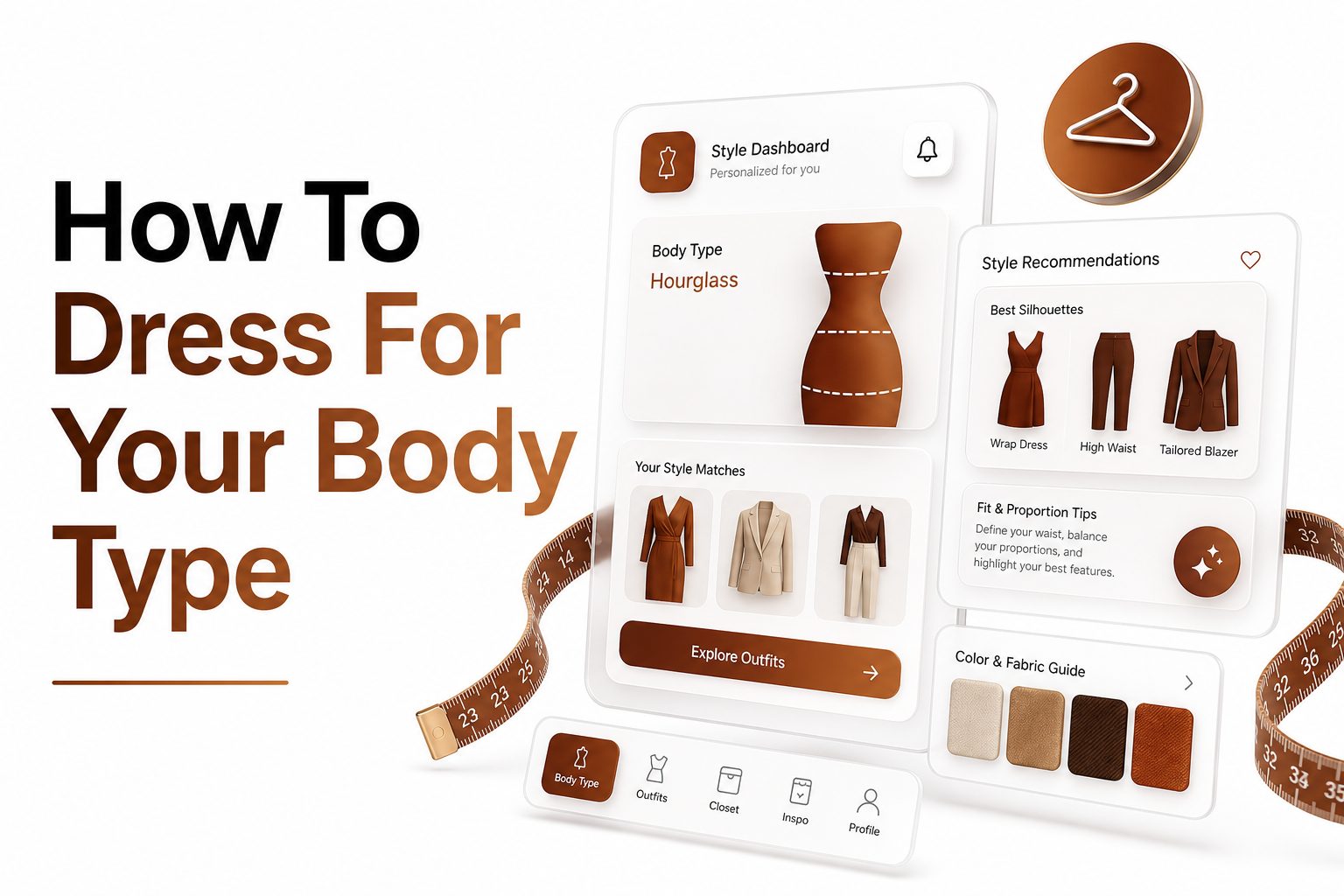
Dressing well begins with noticing how clothes interact with your natural proportions. The goal is not to hide your shape, but to choose pieces that feel balanced, comfortable, and aligned with your personal style.
The phrase how to dress for your body type is often tied to rules, but modern style is more flexible. Good dressing focuses on fit, proportion, fabric, and confidence rather than forcing every person into one strict category.
A useful wardrobe makes daily dressing easier. When you know which cuts flatter your frame, shopping becomes more focused, outfits feel more intentional, and your clothes work together instead of competing for attention.
Why Body Type Styling Matters
Body type styling helps you see patterns in what already works for you. Maybe certain waistlines feel better, structured jackets sharpen your look, or soft fabrics move more naturally with your shape.
This approach also reduces buying mistakes. Instead of chasing every trend, you can choose pieces that support your proportions and suit your lifestyle. That makes your wardrobe more practical, personal, and easier to maintain.
Great style is not about perfection. It is about balance. When your clothes sit well on your shoulders, waist, hips, and legs, the whole outfit looks cleaner, even when the pieces are simple.
Fit: Choose clothes that skim your body without pulling, sagging, or clinging.
Balance: Use shape, length, and color to create visual harmony.
Comfort: Prioritize movement, breathability, and confidence throughout the day.
Proportion: Match garment length to your height, torso, and leg line.
Details: Use collars, sleeves, seams, belts, and shoes to guide attention naturally.
Main Body Type Categories
Most body type guides mention shapes such as hourglass, pear, apple, rectangle, and inverted triangle. These labels are only starting points. Many people sit between categories, and that is completely normal.
Rather than focusing only on labels, look at three areas: shoulders, waist, and hips. Notice whether one area appears broader, straighter, softer, or more defined. This gives better styling direction than a single fixed category.
Your height, posture, bust, torso length, and leg length also influence how clothes look. Two people with the same body type may prefer different cuts because their proportions and personal taste are not identical.
Hourglass Body Type
An hourglass shape usually has balanced shoulders and hips with a more defined waist. Clothing that follows the natural waist often feels flattering because it keeps the body’s proportions clear without adding unnecessary bulk.
Wrap dresses, fitted knit tops, belted coats, high-rise trousers, and tailored blazers can work beautifully. These pieces highlight shape while still looking polished, especially when the fabric has enough structure to hold its form.
Avoid oversized outfits that hide the waist entirely unless that is the style intention. If you enjoy relaxed clothing, combine one loose piece with one more shaped piece so the outfit still feels intentional and balanced.
Pear Body Type
A pear body type usually has hips that appear wider than the shoulders. Styling often works well when the upper body has a little more detail, structure, or brightness to create balance across the frame.
Boat neck tops, statement sleeves, cropped jackets, patterned blouses, and structured shoulders can add presence above the waist. For bottoms, straight-leg pants, A-line skirts, and softly draped fabrics often create a clean line.
Darker bottoms with lighter or textured tops can be useful, but color is not a rule. The main idea is to create harmony between the upper and lower body while keeping the waist and hip area comfortable.
Apple Body Type
An apple body type often carries more fullness through the midsection, with slimmer legs or a less defined waist. The most flattering outfits usually create length, movement, and gentle structure around the torso.
V-neck tops, open-front jackets, tunic-length blouses, straight-leg trousers, and dresses with soft shaping can feel comfortable and polished. Fabrics that skim rather than cling usually give the cleanest result.
Outfits with vertical lines can be especially helpful. Long cardigans, single-breasted coats, column dressing, and low-contrast layers guide the eye downward, creating a lengthening effect without feeling overly styled.
Rectangle Body Type
A rectangle body type usually has shoulders, waist, and hips that are fairly similar in width. Styling often focuses on adding shape, curve, or dimension through clothing lines and thoughtful layering.
Peplum tops, belted dresses, pleated skirts, wide-leg trousers, and cropped jackets can create more definition. Texture, pockets, seams, and layered pieces can also add interest without overwhelming a straighter frame.
If you prefer a minimal look, use contrast through silhouette instead of heavy detail. A fitted top with relaxed trousers, or a boxy jacket with a slim skirt, can create shape while staying modern and clean.
Inverted Triangle Body Type
An inverted triangle body type usually has shoulders that appear broader than the hips. Styling often works well when the lower body has more volume, color, texture, or movement to balance the frame.
Wide-leg trousers, full skirts, cargo details, relaxed denim, and printed bottoms can add visual weight below the waist. On top, softer necklines, simple sleeves, and clean tailoring can create a smoother shoulder line.
This body type can wear strong tailoring very well. The key is choosing jackets and tops that fit neatly at the shoulders without extra padding, heavy embellishment, or exaggerated sleeve volume.
Choosing Necklines and Sleeves
Necklines change how the upper body appears. V-necks can lengthen the torso, scoop necks soften the chest area, square necks create structure, and boat necks add width across the shoulders.
Sleeves also influence proportion. Cap sleeves can widen the shoulder line, three-quarter sleeves can highlight the waist area, and full sleeves can add volume. Small details make a noticeable difference in the final outfit.
When choosing tops, try several necklines in the same color and fabric. This makes it easier to see how the shape affects your frame without being distracted by print, color, or styling details.
Choosing Bottoms That Flatter
Pants and skirts shape the lower half of an outfit. Rise, leg width, hem length, and fabric weight all affect how balanced the body looks. A small change in rise can completely alter the silhouette.
High-rise bottoms can define the waist and lengthen the legs. Mid-rise styles often feel easy and balanced. Low-rise cuts can work well on longer torsos or casual outfits, depending on comfort and proportion.
For skirts, A-line styles add movement, pencil skirts define curves, and bias-cut skirts skim the body softly. The best option depends on your shape, outfit purpose, and how much structure you prefer.
Dresses for Each Body Type
Dresses are useful because they create a complete shape in one piece. Wrap dresses, shirt dresses, sheath dresses, fit-and-flare dresses, and column dresses each offer a different balance of structure and movement.
Hourglass shapes often suit wrap and belted styles. Pear shapes may like fit-and-flare dresses. Apple shapes can look polished in shift or empire styles. Rectangle shapes often benefit from waist detail or layered styling.
The most important dress detail is where the garment defines or releases shape. A waist seam, belt, neckline, sleeve, or hem can change how the dress sits on the body and how confident it feels.
Fabric and Structure
Fabric can make or break an outfit. Stiff fabrics create shape and hold lines clearly, while soft fabrics drape and move. Neither is better on its own; the right choice depends on the body area and garment.
Structured fabrics work well for blazers, trousers, coats, and tailored dresses. Softer fabrics are often better for blouses, knitwear, relaxed skirts, and pieces meant to skim the body rather than shape it firmly.
Pay attention to fabric thickness. Thin fabrics can cling, while very heavy fabrics can add bulk. Medium-weight materials often provide the best balance because they offer coverage, movement, and a refined finish.
Color and Pattern Placement
Color can guide the eye and help balance proportions. Lighter, brighter, or patterned areas usually attract more attention, while darker or simpler areas appear quieter. This can be useful when styling different body types.
For example, a pear shape may enjoy a patterned blouse with simple trousers. An inverted triangle may prefer a printed skirt with a clean top. These choices create balance without relying on strict rules.
Patterns also have scale. Small prints feel subtle, medium prints are versatile, and large prints make a stronger statement. Choose print size based on your frame, outfit purpose, and how much attention you want.
Layering With Proportion
Layering adds depth, but it also changes body lines. Jacket length, cardigan shape, coat structure, and shirt hem placement all affect how the outfit reads from head to toe.
Short jackets can define the waist and lengthen the leg line. Long layers can create vertical flow. Mid-thigh layers can be tricky if they stop at the widest part of the body, so fit and fabric matter.
For a simple layering formula, pair one structured item with one softer item. A tailored blazer over a fluid blouse or a relaxed cardigan over a fitted top can create balance without looking overdone.
Accessories That Shape an Outfit
Accessories help finish an outfit and influence proportion. Belts define the waist, necklaces guide attention toward the neckline, earrings brighten the face, and shoes can lengthen or ground the overall look.
A wide belt can add strong waist definition, while a slim belt feels subtle. Long necklaces can create vertical lines, while chokers or short chains draw attention upward. Choose accessories based on the outfit’s balance.
Shoes matter more than many people think. Pointed toes can lengthen the leg, block heels add stability, ankle straps can visually shorten the leg, and nude or low-contrast shoes create a cleaner line.
Common Styling Mistakes
The most common mistake is wearing clothes that are close to the right size but wrong in proportion. A jacket may fit the bust but pull at the shoulder, or trousers may fit the waist but drag at the hem.
Another mistake is copying trends without adapting them. A trending silhouette can still work if you adjust the length, fabric, or styling. Personal fit matters more than wearing the exact version seen online.
Many wardrobes also suffer from disconnected pieces. A top may look good alone but pair poorly with available bottoms. Building outfits instead of single items leads to better daily style and fewer unused clothes.
Smart Shopping Tips
Before shopping, review what you already wear often. Notice repeated shapes, fabrics, colors, and lengths. These clues reveal what works in real life, not just what looks appealing on a hanger.
Try items in full outfits whenever possible. A blouse should be tested with trousers, jeans, skirts, or jackets you already own. This helps you judge usefulness instead of making decisions based only on first impressions.
For more practical wardrobe planning, read our capsule wardrobe essentials guide. It can help you build a tighter closet around pieces that mix easily and support your preferred silhouettes.
Tailoring and Alterations
Tailoring is one of the simplest ways to improve style. A small adjustment to sleeve length, waist fit, hem height, or shoulder shape can make affordable clothing look cleaner and more personal.
Not every item deserves tailoring. Focus on pieces you wear often or garments made from quality fabric. Blazers, coats, trousers, dresses, and jeans usually offer the best return from minor alterations.
When trying clothes, ask whether the issue is size, cut, or construction. If the shoulder, rise, or waist placement is wrong, tailoring may not fully fix it. Starting with the right base shape matters.
Building Outfits by Body Type
A strong outfit usually has a clear focal point. It might be a defined waist, sharp jacket, flowing skirt, beautiful neckline, or standout shoe. One clear focal point often looks better than several competing details.
For an hourglass shape, try a fitted knit top, high-rise trousers, and a cropped jacket. For a pear shape, pair a structured blouse with straight-leg jeans. For an apple shape, combine a long jacket with slim trousers.
For a rectangle shape, style a belted shirt dress with textured shoes. For an inverted triangle, pair a simple top with wide-leg pants. These outfit formulas can be adjusted for work, casual days, or evenings.
Modern Style Over Old Rules
Older body type advice often focused on hiding certain areas. Modern dressing is more thoughtful. It supports your proportions while leaving room for personality, trends, comfort, and self-expression.
You can wear any color, print, or silhouette if the overall outfit feels balanced to you. The better question is how to style the piece so it works with your frame, lifestyle, and confidence.
For more inspiration, our everyday outfit ideas guide offers simple looks that can be adapted to different shapes, budgets, and personal styles without making your wardrobe feel repetitive.
Seasonal Dressing Tips
Body type styling changes slightly with seasons. In warmer months, lighter fabrics, shorter hems, and open necklines create ease. In colder months, coats, boots, knitwear, and layers become more important to proportion.
Summer outfits often depend on fabric and cut. Linen trousers, cotton dresses, wrap skirts, and breathable tops can flatter many shapes when they skim the body and allow comfortable movement.
Winter outfits depend on outerwear. A coat that fits the shoulders, closes smoothly, and ends at a flattering point can improve the entire look. Scarves, boots, and structured bags can also support proportion.
Workwear for Body Types
Workwear benefits from clean lines and reliable fit. Blazers, trousers, dresses, skirts, and blouses all create a professional impression when they sit properly and allow movement through the day.
Hourglass shapes may like belted blazers or sheath dresses. Pear shapes can use structured tops with tailored pants. Apple shapes often look sharp in longline jackets. Rectangle shapes can add shape with belts or pleats.
Inverted triangle shapes may prefer simple tops with fuller trousers or skirts. Across all body types, workwear looks strongest when colors coordinate, fabrics resist wrinkling, and shoes match the level of formality.
Casual Style for Body Types
Casual dressing still benefits from proportion. Jeans, T-shirts, sweaters, sneakers, and jackets can look polished when the fit is deliberate. Relaxed clothing works best when at least one part of the outfit has structure.
If you wear oversized tops, balance them with slimmer or straighter bottoms. If you wear wide-leg pants, try a tucked, cropped, or shaped top. These simple pairings keep casual outfits from looking shapeless.
Denim is especially important. Straight-leg, bootcut, wide-leg, relaxed, and slim jeans all create different lines. The best pair feels comfortable at the waist, smooth through the hip, and clean at the hem.
Evening Style for Body Types
Evening outfits can be more expressive while still respecting proportion. Satin, velvet, lace, sequins, and structured tailoring all add visual interest, so the silhouette should feel clear and comfortable.
A wrap dress, tailored jumpsuit, slip skirt, sharp blazer, or elegant wide-leg pant can suit many body types. The right styling depends on neckline, waist placement, fabric weight, and shoe choice.
Instead of relying only on tight clothing, consider contrast. A sleek top with flowing trousers, a structured jacket with a soft dress, or a simple column outfit with bold jewelry can feel refined and modern.
Conclusion
Learning how to dress for your body type helps you build a wardrobe that feels easier, sharper, and more personal. The best outfits are shaped by fit, proportion, fabric, and comfort, not by strict rules or narrow beauty standards.
Every body type can wear modern trends, classic staples, and expressive pieces. The difference comes from adjusting details such as neckline, waist placement, hem length, fabric structure, and accessory scale.
A thoughtful wardrobe supports daily life. When your clothes fit your shape and reflect your taste, getting dressed becomes simpler, more consistent, and more enjoyable across work, casual plans, evenings, and every season.
FAQs
How do I know my body type?
Look at your shoulders, waist, and hips in relation to one another. Notice which area appears broadest, narrowest, or most defined. Use body type labels as a guide, but let fit and comfort shape your final choices.
Can I dress well without knowing my body type?
Yes, you can dress well by focusing on fit, proportion, and comfort. Body type guidance simply makes decisions easier. If clothes sit smoothly, support your shape, and feel natural to wear, the outfit is already working.
Which clothes flatter every body type?
Well-fitted jackets, straight-leg trousers, wrap dresses, clean T-shirts, and medium-weight knits can flatter many body types. The details may vary, but balanced proportions, quality fabric, and proper length make these pieces widely useful.
Should I avoid trends for my body type?
Trends can work for any body type when styled with proportion in mind. Adjust length, fit, fabric, or styling details so the trend supports your frame. Personal taste matters just as much as body shape.
What is the biggest styling mistake?
The biggest mistake is choosing clothes by size alone instead of fit. A garment can be technically your size and still sit poorly. Shoulder placement, rise, waist shape, fabric, and length all affect the final look.
0 Comments